top of page

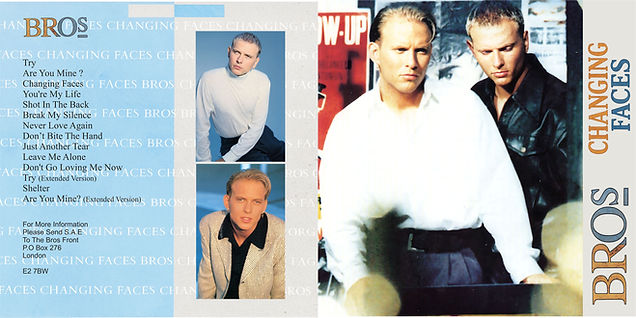
"Changing Faces," released on September 30, 1991, stands as the third and final studio album by Bros, This album marked a pivotal moment in their musical journey, as it was the first time they co-wrote all the songs together, stepping away from the influence of established songwriters. Notably, it was also the first album that didn't feature Nicky Graham, who had played significant roles in their previous projects both as a writer and producer. This shift indicated a new direction for the duo, as they sought to redefine their sound and image in an evolving music landscape. Distributed by Columbia Records and published under Warner Chappell Music Ltd, "Changing Faces" managed to achieve moderate commercial success. It peaked at number 18 on the UK Albums Chart and sold approximately 900,000 copies worldwide. This level of success, however, did not reflect the ambitious goals set by the brothers as they experimented with their artistry on this album. It featured two singles that were released to promote the album, but their appeal was not enough to garner widespread acclaim.
Critics received "Changing Faces" with a mixed response, and several prominent voices in music journalism expressed disappointment. Jimmy Nichol from Q magazine was among the most vocal critics, suggesting that the album attempted to emulate the style of George Michael, which may have been a strategic move aimed at regaining the popularity that Bros had enjoyed in their earlier years. Although Nichol acknowledged that there were some appealing ballads on the album, he ultimately lambasted the work for what he described as Matt Goss's "incessantly misogynistic lyrics." He also pointed out that Luke Goss's potential as a songwriter and vocalist was not fully realized, leaving listeners yearning for a deeper exploration of his artistry. Similarly, the Stud Brothers from Melody Maker highlighted a noticeable departure from the self-assured arrogance that once characterized Bros. This perceived shift left the album lacking the charm that had set them apart from other pop acts of the time, suggesting that their new sound lacked the compelling uniqueness that had endeared them to fans. They characterized the album's mix of "fake funk" and overly sentimental ballads as excessively lavish, questioning whether it truly resonated with its intended audience. The critiques suggested a significant misunderstanding of their artistic direction; some reviewers implied that perhaps Matt should focus solely on performance rather than songwriting, arguing that he lacked the necessary creative ability or musical sophistication to produce credible pop songs.
In summary, "Changing Faces" illustrated a disconnect between the duo's creative evolution and the expectations of both critics and fans. While Luke sought to experiment with a more rock-oriented sound, Matt's vision leaned towards a style influenced by icons like Stevie Wonder. This internal conflict contributed to a lack of cohesive direction on the album, ultimately leading both critics and listeners to reject the new sound. The album serves as a testament to the challenges faced by artists attempting to navigate changing musical landscapes while staying true to their identity, highlighting the difficulties of re-establishing relevance in a fast-paced and ever-evolving industry.




bottom of page